A fun Transistor Tester
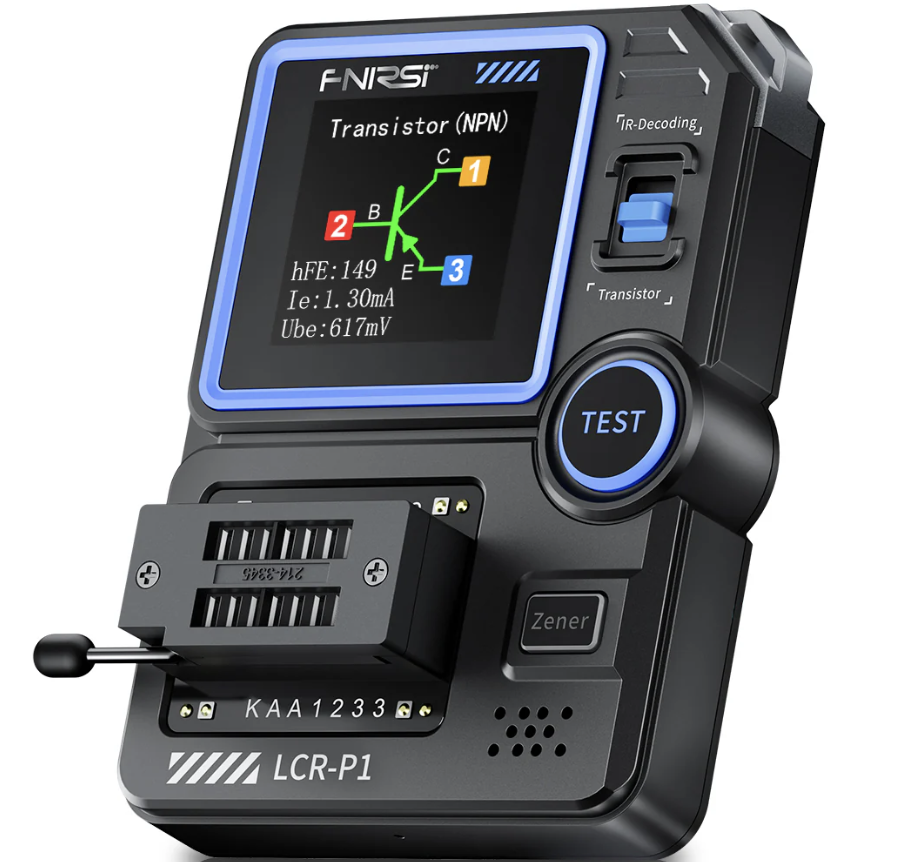
The FNRST LCR Transistor Tester is a portable electronic measurement tool based on an open-source community design, with its core function being the rapid detection of common electronic component parameters. Its predecessor was the "AVR TransistorTester" developed by German engineer Markus Frejek, which was later optimized by developer Karl-Heinz Kübbeler (pseudonym "Madires") and evolved into the widely popular "M328 Transistor Tester".
FNRST is a commercialized version of this open-source design, retaining the advantages of low cost and high cost-performance, making it suitable for electronics enthusiasts, repair engineers, and students.
This palm-sized device can be called a "health check-up center" for electronic components. After powering on, simply insert the component into any of the three gold-plated test terminals, and it will complete the "inspection" in just half a second.
For resistors, it can accurately measure values ranging from 0.1Ω to 50MΩ with a precision of 1%. When testing capacitors, it not only displays capacitance from 1pF to 100mF but also thoughtfully indicates the Equivalent Series Resistance (ESR), helping assess the degradation of aging capacitors.
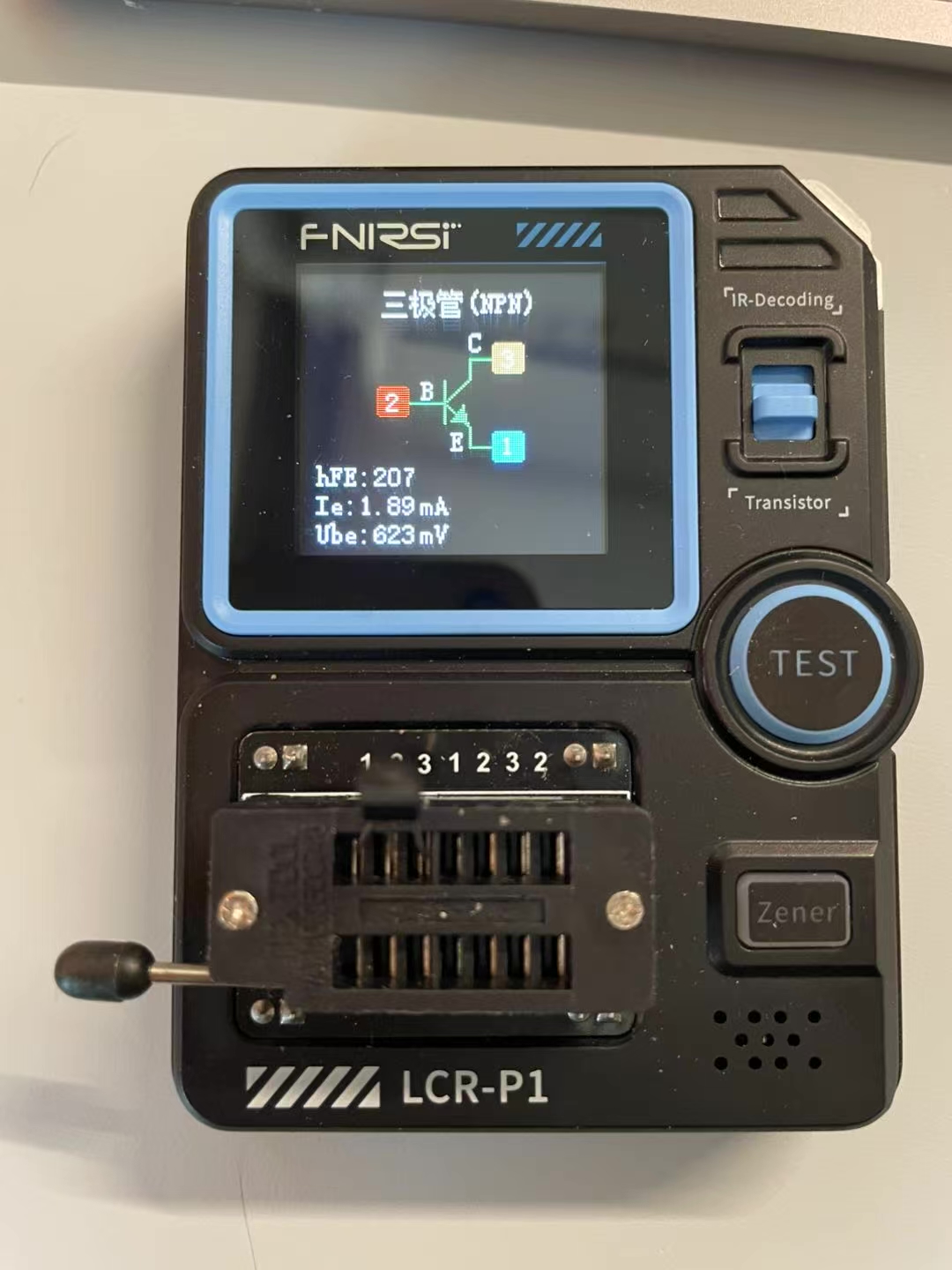
When detecting transistors, the screen clearly labels the NPN/PNP type, β value (current gain), and even uses arrow diagrams to show pin configurations. For instance, when testing a long-forgotten 2N3904 transistor, the screen immediately displayed: "NPN β=215, pins E-B-C", perfectly matching the datasheet specs. For diodes and LEDs, it measures forward voltage drop, and even captures MOSFET gate threshold voltage (Vgs) with ease.
Some modified versions hold an extra surprise—holding down the function key activates a PWM signal generator, outputting a 1kHz square wave as a simple signal source.
eg. measuring resistors:
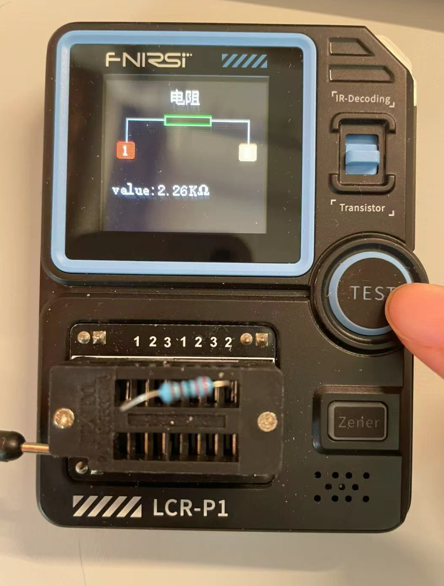
We can see the value of resistance directly.
eg. measuring capacitors
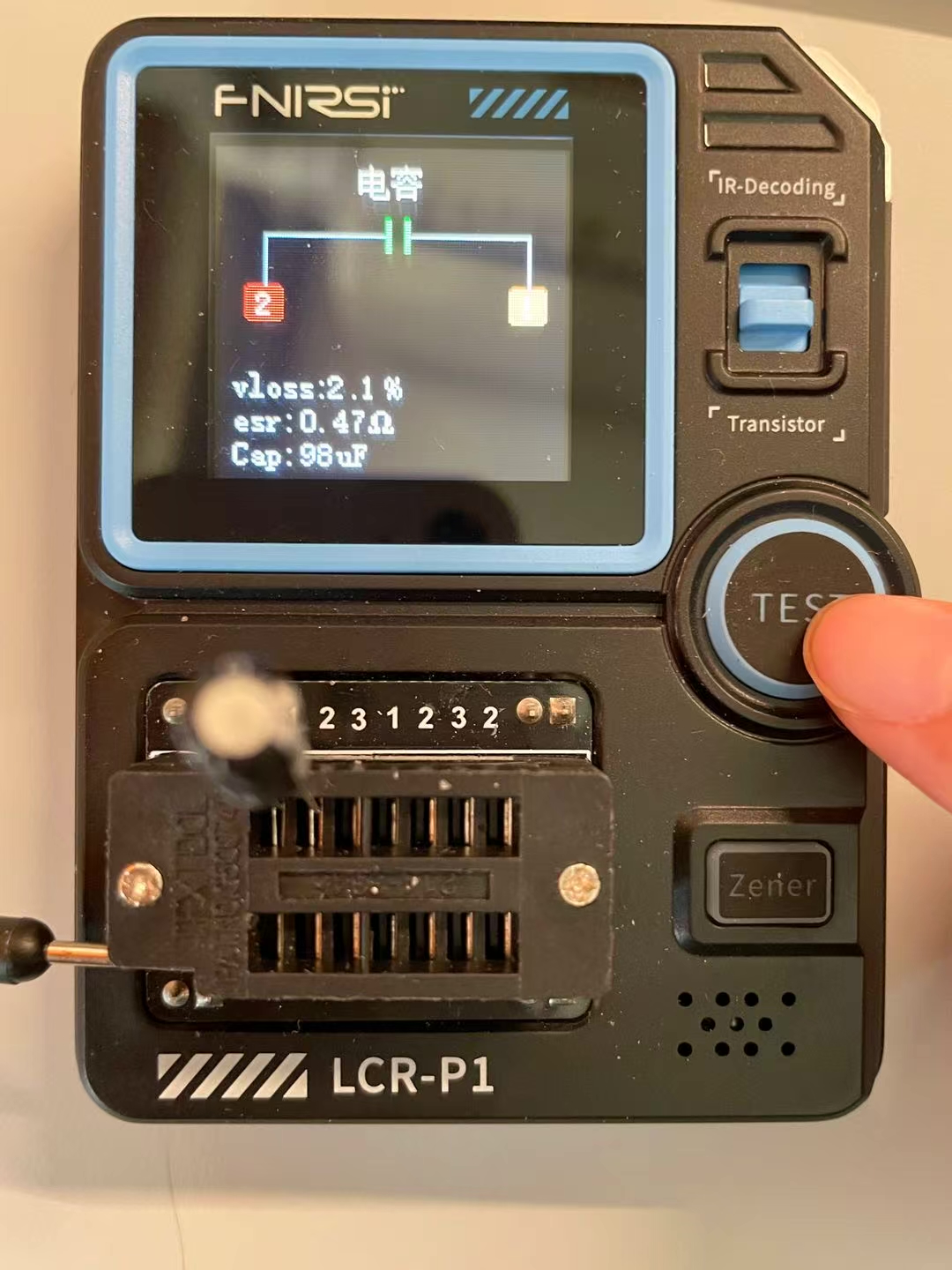
All we need to do is inserting pins into any detection hole.